
Cleanouts
Estate Cleanout Checklist for Pensacola Families: Working in the Right Order
Clearing a relative's Pensacola home works when you follow an order: secure the house, search it, save the paperwork, appraise, distribute, donate, then dispose. A practical room-by-room checklist.
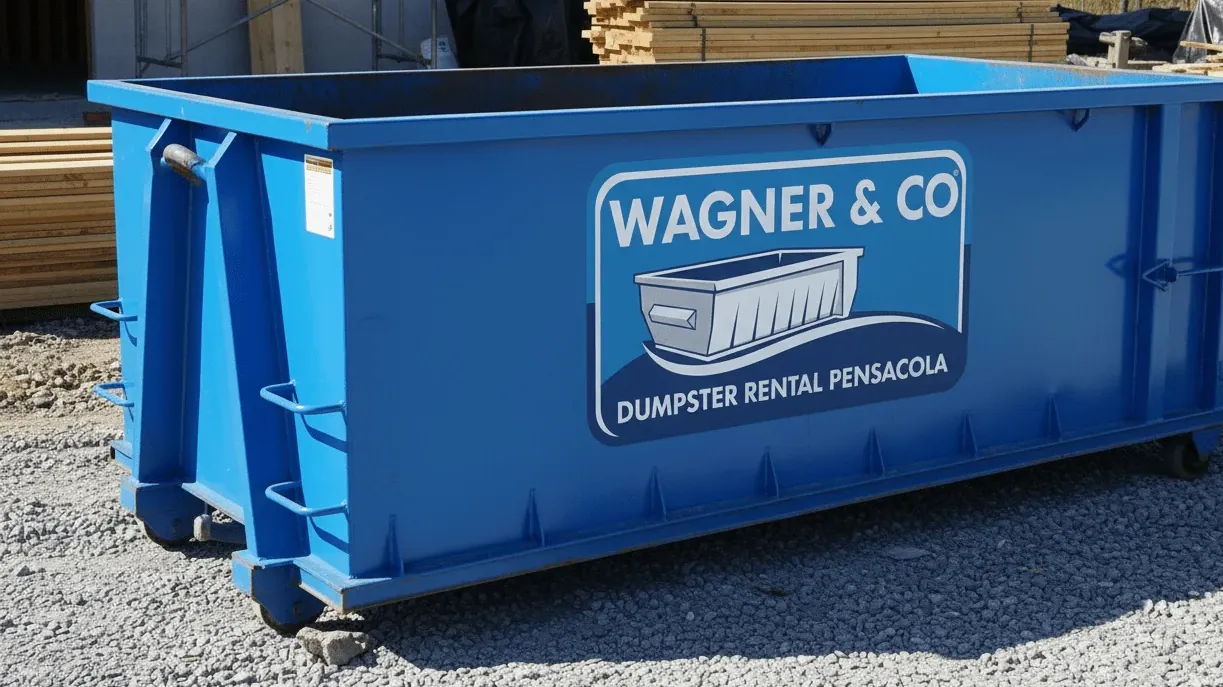
A parent dies, or moves into care, and a house in East Hill or off Creighton Road that has been lived in for forty years has to be emptied. We have set containers on a lot of those driveways since 2016, and the families who get through it cleanly all work in an order — and the order does not start with a dumpster. This is the checklist we give people who call about an estate cleanout in Pensacola. It is a work order, not a grief guide.
The order matters more than the effort
Secure the house. Search it. Get the paperwork out. Appraise. Distribute what family has claimed. Donate what a charity will take. Then, and only then, fill a container with what is left.
Run those out of sequence and you cannot undo it. The classic mistake is the nephew who shows up Saturday to "make a dent" and clears the hall closet into the box before anyone opens the shoeboxes. Savings bonds, service records and an envelope of cash go over the rail in the first hour, and nobody finds out for six months. Do not start by throwing anything away.
Probate, the executor and the pace it sets
Whoever is named personal representative sets the pace, and is generally not free to dispose of assets on their own timetable. Estate property may need to be inventoried, valued and reported first, and scrapping something of value ahead of that creates a real problem for the person who signed for the role.
Florida probate rules are specific and they change. Before you dispose of, sell or give away anything that could be called an asset — vehicles, firearms, jewellery, coins, tools, antiques — confirm with the estate's attorney that you are clear. Nobody needs a lawyer's permission to bin a broken lamp, but anything with a plausible value waits for a yes. Practically, the first container is for obvious rubbish only.
Secure the house, then search it properly
Change the locks, or at least control the keys — children, neighbours, a cleaning service and a former caregiver may all have one. Forward the mail. Then search, before any volume work begins, for cash, jewellery, firearms, prescription medication and documents. Older Gulf Coast households hide things, and they hide them in the same places generation after generation:
- Coffee cans, jars and taped-shut food tins in the pantry and the garage
- The freezer — foil packets and margarine tubs that do not contain margarine
- Toolboxes, tackle boxes and cigar boxes on the garage shelf
- Inside books, especially Bibles, and taped behind drawers and picture frames
- Under mattresses, in pillow ticking, in the toe of a boot
- Attic rafters and the top of a wardrobe, under a blanket
Firearms and medication come out first, before grandchildren are in the house. Escambia County and local law enforcement run medication take-back options, and arrangements change, so confirm current drop-offs with Escambia County first.
The paperwork that must not go in the container
Set up one file box in the kitchen on day one. All paper goes in unsorted and gets read later by one person. What you are protecting:
- Deeds, titles, mortgage satisfactions and surveys
- Life insurance policies, annuity contracts and homeowner's policies
- Bank, brokerage and retirement statements
- Paper savings bonds, still real money and still turning up in sock drawers
- Birth, marriage and death certificates, Social Security cards, recent tax returns
Add one more line and take it seriously: military service records. DD-214 discharge papers, retirement orders, VA claim files, disability ratings and pension paperwork. Pensacola is a Navy town going back generations, and a DD-214 is an unremarkable sheet in a manila envelope that a tired volunteer bins without a second look. It governs burial benefits, headstone eligibility and a surviving spouse's claims, and losing it turns a phone call into a months-long records request.
Anything carrying an account number, a Social Security number or a signature gets shredded, not binned. A roll-off on a public driveway is not a secure document container.
What a Pensacola house actually holds
If you have cleared houses elsewhere, recalibrate. There is no basement here. Homes are slab-on-grade or sit on brick piers, so the volume is spread across four places: the garage, the attic, the backyard shed and the carport. Add a rented storage unit off Davis Highway or Fairfield Drive that nobody has opened since 2014 and is still on autopay.
On the historic stock in North Hill, Seville and Old East Hill you also have a crawlspace. That is not storage. It is where you find moisture, rodent damage, failed ductwork and termite work at the sill. If someone stored boxes down there, treat them as compromised. Our notes on historic home renovation debris in Pensacola cover what comes next.
The attic is a morning job
A Gulf Coast attic is genuinely dangerous by mid-morning in summer. Work it at first light and get out before the roof deck starts radiating.
Expect losses. Heat and damp have been working on that material for decades: photographs stick together and the emulsion lifts, album pages fuse, tape sheds oxide, vinyl warps, cardboard collapses and anything glued is often gone. Bring boxes down into air conditioning before opening them. Do not sort in the attic; you will make bad decisions because you are hot.
Military estates deserve a decision, not a bin
Uniforms, dress blues, medals, ribbons, unit patches, squadron plaques, cruise books, flight logs and shipboard photographs all deserve a deliberate decision. Some go to descendants, some to a museum or unit association, some to a collector who pays properly for insignia and cruise books. Very little should be scooped into a container because it shared a box with old bed linen. Families clearing a house against a PCS move-out timeline feel that pressure hardest.
Appraise before you haul
Get one honest opinion before the estate sale, from someone who is not buying. The categories that surprise families:
- Solid-wood furniture, especially pre-1960 case goods and anything with a maker's mark
- Hand tools and older American-made power tools — the garage often outsells the living room
- Coastal and maritime material: ship models, charts, brass instruments, decoys, old outboards
- Firearms, which need a valuation and a lawful transfer, not a yard-sale table
- Coins, currency and sterling, weighed and identified rather than guessed
- Quilts, linens and textiles, binned constantly and with a real market
The salvage nobody thinks about
If the house is being renovated, pull architectural salvage before the container lands. Heart pine flooring, beadboard, panel doors, mantels, transoms and hardware, clawfoot tubs, rim locks and reclaimable brick all have Gulf Coast buyers. Once it is in a mixed load it is worth nothing.
Estate sale, auction or donation
A full house of mixed contents with decent furniture suits an estate sale company — they price, staff and clear. A handful of genuinely good items suits auction, because a competitive room finds the ceiling. Everything else is donation, and the important part is calling ahead: most charities now refuse mattresses, upholstery with any odour, particleboard furniture, older televisions and car seats. What is left is the container load, though for modest volume labour-based junk removal is the alternative.
The sorting method that actually works
Room by room, never whole-house. Four categories only: keep, sell, donate, dispose. A fifth "decide later" pile is how a cleanout stalls for three months.
One decision-maker per room, not a committee. Siblings can trade rooms, but two people arguing over a china cabinet stops the job. Stage sorted material in the garage or under the carport, not on the driveway — an afternoon thunderstorm builds fast here and soaks a donation pile in ten minutes. See our notes on protecting a driveway during delivery.
| Room or building | What is usually in it | Where it goes | Watch out for |
|---|---|---|---|
| Bedrooms and closets | Clothing, linens, jewellery, documents, keepsakes | Family, donation, shred box | Cash and bonds in drawers, pockets and boot toes |
| Kitchen and pantry | Small appliances, cookware, china, expired food | Donation, container | Coffee cans and freezer packets holding cash |
| Living and dining | Furniture, art, silver, glassware, photographs | Estate sale or auction | Appraise before anyone hauls it |
| Home office | Deeds, policies, DD-214s, VA and retirement files | File box, then shred | Service records that look like scrap paper |
| Garage and carport | Tools, fishing gear, paint, fuel, batteries, tires | Sale, county HHW, container | Chemicals and fuel are prohibited in the box |
| Attic | Photos, tape, vinyl, cardboard boxes, holiday goods | Family, container | Heat and damp damage; work it at dawn |
| Backyard shed | Mower, gas cans, fertiliser, pesticide, hand tools | Sale, county HHW, container | Drain fuel and oil before anything moves |
| Crawlspace (older homes) | Ductwork, plumbing, occasional stored boxes | Container, or a contractor | Not storage — moisture, rot and termite damage |
| Storage unit | Furniture, boxes nobody has opened in a decade | Sort on site, then container | Mould from years of unconditioned storage |
Sizing and sequencing
Most whole-house estate cleanouts run a 20 yard roll-off for the first pass with a swap booked, rather than one 30 yard sitting for a fortnight. The first pass fills fast with obvious rubbish; the second, after the sale and donation runs, is smaller and better sorted.
Size down when contents are dense. Old-house material — plaster, heart pine, cast iron, a shed of tools, books by the crate — hits weight long before volume. A 15 yard container is often right on a tight historic-district lot. Our dumpster size guide for Pensacola works through it.
Mould, damp and pre-1980 hazards
This is a humid market. Anything that has sat in an unconditioned garage, a shed or a damp crawl area needs a fast decision, not a maybe pile. Musty upholstery, mattresses, cardboard and paper are not worth restoring and contaminate what they sit beside. Bag them and get them out. Wear an N95 and gloves; Florida Health publishes current mould guidance.
If the house is pre-1980 and the cleanout turns into demolition, stop. Asbestos routinely turns up in nine-inch floor tile and its black mastic, textured ceilings, pipe and duct wrap and cement siding. Testing is cheap next to the alternative, and demolition generally triggers inspection and notification through Florida DEP. We cannot accept asbestos-containing material in any container, and requirements change, so confirm current rules before work starts. In the historic districts, exterior work and demolition can also need Architectural Review Board sign-off — check with the City of Pensacola.
What cannot go in the box
Paint, solvents, pool chemicals, pesticide, motor oil, gasoline, propane cylinders, tires, batteries, electronics and any appliance holding refrigerant. Those go to an Escambia County household hazardous waste drop-off. One note for anyone who has cleared a house in another state: PaintCare does not operate in Florida, so there is no paint-store take-back here. Our guides to what can go in a dumpster in Escambia County and local recycling and disposal carry the full list; accepted items and hours change, so confirm with the county first. Yard waste is separate too — overgrowth is a clean vegetative load, never mixed in.
Pace it over weekends
The families who burn out book a container Friday and try to empty a forty-year house by Sunday night. Decisions made at hour thirty are bad ones. Two or three weekends, with a container on site and a swap between, is the humane version. A general home cleanout checklist covers the mechanics; the difference with an estate is that every fourth box stops the room, and you have to allow for that.
When you are ready, we do this every week across Escambia and Santa Rosa County — flat-rate pricing, protection boards standard, same-day and next-day delivery, next-day swaps. Tell us the house and the era and we will tell you honestly what size to take. Call Wagner & Co Dumpster Rental Pensacola at (448) 288-5053 and we will get a box on the driveway when you actually need it — not before.
Questions this guide did not answer? Call (448) 288-5053. We would rather spend two minutes on the phone than have you order the wrong container.