
Moving
Military PCS Move-Out Cleanouts in Pensacola: A Guide for Families and Landlords
PCS season runs May through August and every family, mover and landlord in Escambia County feels it at once. How to sort a move-out, protect your weight allowance and book before the season fills.
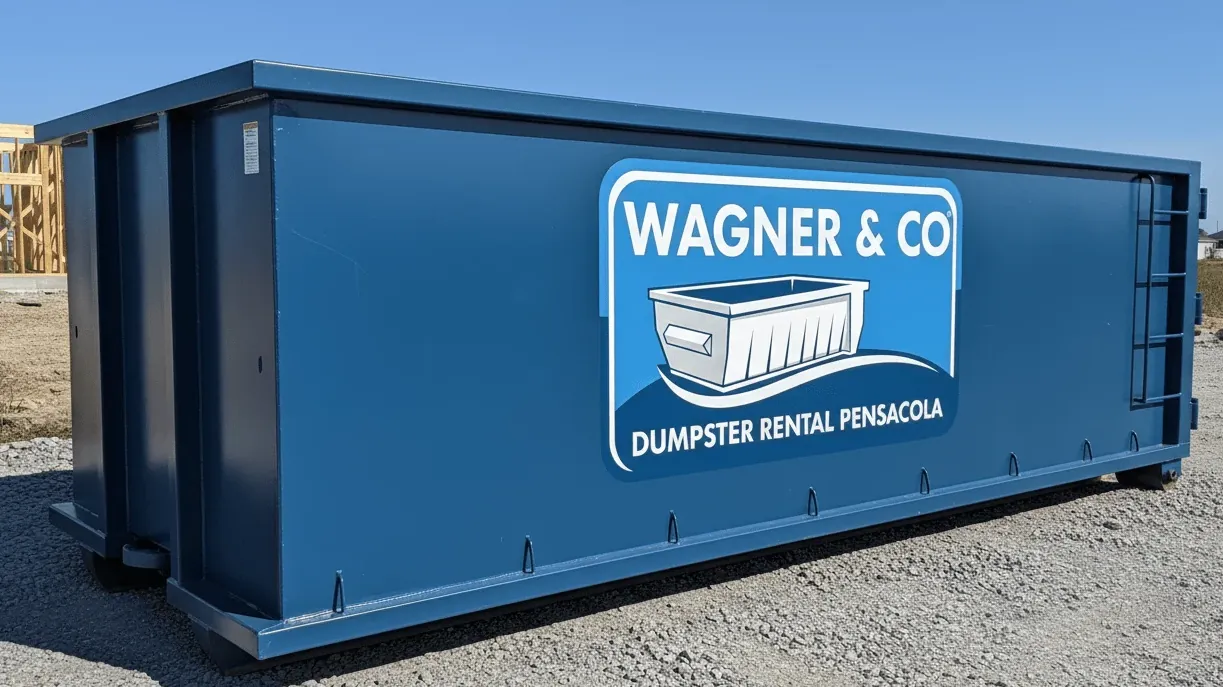
If you have lived here long you can feel PCS season coming. School lets out, the moving trucks start working Warrington, Myrtle Grove, Navy Point and the rental streets off Gulf Beach Highway, and every third driveway on a Saturday has a garage emptied onto it. NAS Pensacola, Corry Station and NAS Whiting Field in Milton move a lot of families, mostly in the same fifteen weeks.
We have been setting roll-offs on those driveways since 2016. Here is how a PCS cleanout actually goes.
The PCS calendar is the whole problem
Orders cluster. Report dates get written so families move between school years, so the bulk of outbound moves land between mid-May and the end of August. Everybody in the chain feels it at once — packing crews, carpet cleaners, make-ready painters, storage yards, container companies. Capacity does not vanish; everyone wants the same Thursday.
Month ends are worse. Report dates bunch there, leases end on the last day, and housing hands keys back on a schedule. The last ten days of June and July are the tightest stretch of the year here.
Book weeks out. Three to four weeks ahead of your pack-out date is not excessive in June. Ask for delivery a few days before the packers arrive — sorting has to happen first, so the crew only packs what is going. We run same-day and next-day delivery constantly, but in July that is a lifeline, not a plan.
The weight allowance problem
Here is what catches junior families the first time. A service member has a household goods weight allowance set by rank and dependency status. Ship under it and the government covers the move. Go over and the excess comes out of the member's own pocket, billed after the crates hit the scale.
So the arithmetic is simple, and it is the most useful line here: the cheapest thing you can do is not ship what you do not want. Every pound sorted out on the driveway never gets weighed. The treadmill nobody has used since Norfolk, the pressed-wood bookcases reassembled at three duty stations, the garage boxes moved twice without being opened — pure weight, no future.
A container on the driveway is a weight-reduction tool. It is there so the answer to "do we keep this?" can be no, immediately, with no truck run to Perdido Landfill.
One plain caveat: allowances and entitlements change, and they differ by rank, dependency status and move type. Do not take a website's word for it, ours included. Confirm current numbers with your transportation or personal property office.
What actually gets left behind
After a few hundred of these, the pile is remarkably consistent. It is almost never the living room furniture. It is:
- The garage and the shed — shelving, half-used building materials, outgrown bikes, tools bought for one job.
- Lawn equipment. Mowers, trimmers and blowers with fuel systems are a fight with the movers even drained.
- The propane grill and its tanks. Nobody ships a grill across the country.
- Fuel, chemicals and paint — gas cans, two-stroke mix, pool chemicals, pesticide, leftover gallons from a repaint done for the landlord.
- Kids' outdoor gear. Play sets, trampolines, sandboxes, slides — sun-bleached, and the disassembly is worth more than the item.
- Patio furniture the salt air has finished. Steel that lived near the water for three years is rust with cushions on it.
- Pressure-treated offcuts from the deck or fence repair, and the pickets you replaced.
- The storage unit — rented on arrival, filled, forgotten, now due.
- Furniture from three duty stations back, repaired twice with the wrong screws.
Yard debris is separate. Florida keeps vegetative waste out of solid waste, so limb wood and clippings from a final tidy go out as a clean load through yard waste removal, never mixed in. Mix them and the load gets reclassified at the scale.
What the movers will not take
Transportation providers refuse a standard list, and the crew sets it aside on pack-out day. Flammables and solvents. Propane cylinders, full or empty. Gasoline, kerosene, lighter fluid. Aerosols. Paint and thinner. Pool and lawn chemicals. Batteries, car batteries and lithium tool packs included. Ammunition. Open or perishable food.
Almost none of it belongs in a roll-off either. Liquids, chemicals, pressurised cylinders and batteries are all out, and our guide to what can go in a container in Escambia County has the full list. Escambia County runs household hazardous waste collection for exactly this material — check current sites, hours and limits through the county's solid waste information, because those change. Propane tanks are usually faster through a retail exchange than a HHW trip, and do not go looking for a paint-stewardship program: that does not operate in Florida.
Where each pile goes
| What you are getting rid of | Ship, sell, donate, container or HHW | Note |
|---|---|---|
| Solid-wood furniture in good shape | Ship or sell | Heavy, but it holds value and survives the crate |
| Particleboard furniture, third duty station | Container | Pure allowance weight; it will not survive the crate |
| Usable sofas, tables, dressers, kitchenware | Donate | Base thrift and local charities; call ahead in summer |
| Propane grill body | Sell or container | Tank comes off first and goes separately |
| Propane cylinders | Exchange or HHW | Never in a container, full or empty |
| Gas cans, two-stroke mix, kerosene | HHW | Drain equipment days ahead, not pack-out morning |
| Leftover paint from the repaint | HHW | No paint-stewardship program in Florida |
| Pool and lawn chemicals, pesticide | HHW | Keep in original labelled containers |
| Batteries and lithium tool packs | HHW or retailer take-back | Fire risk in any mixed load |
| Mower, trimmer, blower | Sell, donate or container | Fuel and oil out first |
| Play set, trampoline, plastic slide | Donate if sound, container if not | Budget time for disassembly |
| Rusted patio furniture and cushions | Container | Salt air ends these fast |
| Pressure-treated offcuts, old fence pickets | Container | Keep out of the yard-waste load |
| Limb wood, clippings, pine trimmings | Separate clean yard-waste load | Florida keeps vegetative debris out of solid waste |
| Storage unit unopened for two moves | Container, after one honest look | You did not open it here, you will not open it there |
| Floor tile, mastic or pipe wrap, pre-1980 house | Stop and ask | Possible asbestos; not accepted in any container |
Base housing, rentals and the inspection standard
Base housing or a private rental off Blue Angel Parkway, you are handing the place back to a standard, and the standard is not "clean enough." Nail holes filled, blinds intact, yard cut, nothing in the shed, attic or crawlspace. Anything left behind comes off a deposit or gets billed.
Photograph everything before it leaves — every room empty, every wall, the yard, the garage floor, the meter readings, timestamped. Ten minutes, and it settles disputes arguing never will.
Landlords have the harder version. In July you may be sequencing an outbound family, a make-ready and an inbound family inside the same fortnight, with paint, carpet and a punch list between them. The container has to land the day the outbound family leaves, not three days later, or the crew works around a pile. Our home cleanout checklist doubles as a make-ready sequence, and if a tenant left it badly we can pair a box with labour-included junk removal and clear the place in a day.
Humidity, mould and the staging mistake
This is a wetter market than most of Florida, and staging everything in the carport for a few days is how you ruin what you were keeping. A sofa, mattress, rug or box of linens sitting in a humid garage through a week of afternoon storms comes out smelling of mildew, and once it is in the foam it stays. Water intrusion here turns into mould in roughly 24 to 48 hours.
Sort soft goods indoors and load them the same day. Anything already damp from a shed or crawlspace is a container item, not a shipping item. You do not want mould sealed in a crate for six weeks in transit.
Hurricane season overlaps PCS season
Season opens June 1 and runs to November 30, so half of every PCS summer sits inside it. Ivan in 2004 and Sally in 2020 are not abstractions here. If a container is on your driveway when a watch goes up: keep the load low and below the rails so nothing goes airborne, get it capped or tarped and secured so it does not fill with rain, and keep it off the street and away from the storm drain, because low streets flood and nothing should wash toward Bayou Texar or Bayou Chico. Call us if a storm is coming and the box is full. Watch the National Weather Service and Florida Division of Emergency Management, and see our notes on storm debris cleanup.
Donate first, container second
Much of what comes out of a PCS move-out is usable, and the inbound family two streets over needs exactly that. Base thrift shops and local charities take furniture, kitchenware, clothes, kids' gear and small appliances. Call ahead in June and July — they get swamped the same weeks you do, and some will not take upholstery or mattresses. Anything damp goes in the container regardless of condition.
Sizing: usually a 15 or a 20
For a family move-out of a three or four bedroom house, a 15 yard or 20 yard covers it. Take the 20 when a play set, patio furniture or a storage unit is in play, since bulky items eat volume long before they get heavy. If the job is just a garage and shed, a 10 yard is enough and fits a short driveway better.
Bigger is not automatically better. A 30 or 40 needs more driveway length and overhead clearance to set and pick up, and on a tight rental lot it is the wrong tool even when the volume works. Our Pensacola dumpster size guide walks the trade-off, and we do next-day swap-outs, so an undersized box is recoverable.
Placement, permission and the live oaks
In base or privatised housing, get permission before a container is set on government property. Housing offices set their own rules on driveway use, duration and placement, and the answer varies by neighbourhood and management company. Ask early; pack-out week is a bad time to find out you need a form. Off base, if the only spot is the street, a right-of-way permit may apply — our Pensacola permit guide covers it and the City of Pensacola is the authority for city streets. Requirements change, so confirm with whoever owns the road.
Driveways in the older rental stock are narrow. On Perdido Key and Pensacola Beach they are short, sandy and often shell or pavers, and a loaded roll-off will sink or scar them — protection boards come standard and matter more out there than anywhere in the county. Then look up. Live oak limbs hang low over half the streets here, and a roll-off truck needs real vertical clearance to raise the bed. Tell us before delivery day and we will pick a different spot.
The walkthrough before the container goes
Last thing, and people skip it. Before you call for the pickup, walk the property once more with the box still there. Attic hatch. Shed, and behind the shed. Crawlspace access. Under the deck. Behind the AC unit. The top garage shelf nobody can reach. That walk turns up two or three more items, and it is cheaper to put them in the container on the driveway than to deal with them after the keys are gone.
Wagner & Co Dumpster Rental Pensacola is locally owned, licensed and insured, and Ross Wagner has been running roll-offs in Escambia and Santa Rosa County since 2016. Flat-rate pricing, protection boards standard, next-day swap-outs, and residential roll-offs in 10, 15, 20, 30 and 40 yard sizes. If you have orders this summer, or you manage rentals that turn over every June, call (448) 288-5053 and get your dates on the board before the season fills.
Questions this guide did not answer? Call (448) 288-5053. We would rather spend two minutes on the phone than have you order the wrong container.